


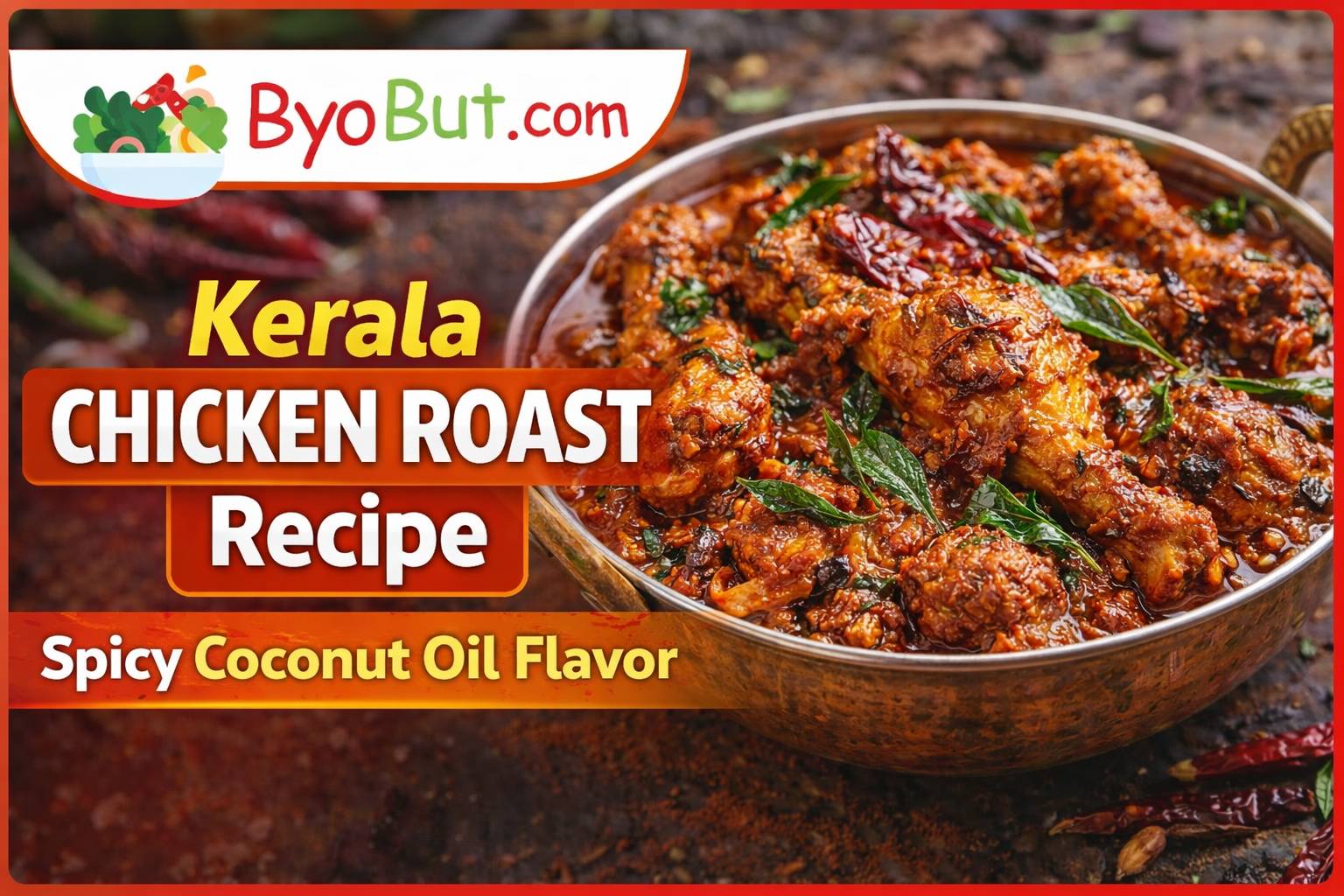
Prepare to take your tastebuds on a trip to the tropical backwaters of the South. A traditional Kerala Chicken Roast (Nadan Kozhi Roast) is vastly different from a Western roasted chicken. In Kerala, “roast” means taking par-fried meat and slow-cooking it in a thick, intensely caramelized onion and spice base until the gravy almost completely evaporates, clinging to the chicken like a dark, glossy, spicy jacket.
Table Of Content
- The Secrets to an Authentic “Nadan” Roast
- Ingredients
- The First Step: Marination
- The Roasting Masala
- The Spice Blend
- Step-by-Step Instructions
- 1. The Flavor Lock (Marination)
- 2. The Shallow Fry
- 3. The Caramelized Base
- 4. The Spice Bloom
- 5. The Tomato Melt
- 6. The Slow Roast
- 7. The Peppery Finish
- Frequently Asked Questions (Q&A)
- Ready for the ultimate South Indian pairing?
The flavor profile is unmistakable: the earthy sweetness of coconut oil, the sharp bite of crushed black pepper, the aromatic warmth of fennel seeds, and handfuls of fresh curry leaves.
The Secrets to an Authentic “Nadan” Roast
- The Holy Trinity of Kerala Cooking: Coconut oil, black pepper, and curry leaves. If you compromise on any of these three, you are making a generic chicken curry, not a Kerala Roast.
- Patience with the Onions: The onions must be sliced thinly and sautéed slowly until they are deeply caramelized (almost jammy). This natural sweetness balances the fierce heat of the spices.
- The Two-Step Cook: The chicken is first marinated and shallow-fried to seal the juices and create a crust, and then it is folded into the thick masala to finish cooking.
Ingredients
The First Step: Marination
- Chicken: 750g, bone-in, cut into medium pieces.
- Turmeric Powder: 1/2 tsp.
- Kashmiri Red Chili Powder: 1 tbsp.
- Black Pepper Powder: 1/2 tsp (freshly ground).
- Lemon Juice: 1 tbsp (or a teaspoon of white vinegar).
- Salt: To taste.
The Roasting Masala
- Coconut Oil: 3 to 4 tbsp (Essential for authentic flavor).
- Onions: 3 large, very thinly sliced.
- Ginger: 2-inch piece, crushed or finely minced.
- Garlic: 8-10 cloves, crushed.
- Green Chilies: 3-4, slit (adjust to your heat tolerance).
- Curry Leaves: 3 generous sprigs (the more, the better).
- Tomatoes: 2 medium, finely chopped.
The Spice Blend
- Coriander Powder: 1.5 tbsp.
- Kashmiri Red Chili Powder: 1 tbsp (for color).
- Fennel Powder (Saunf): 1 tsp (This is the signature Kerala aroma).
- Garam Masala: 1 tsp.
- Crushed Black Pepper: 1 tsp (added at the very end).
Step-by-Step Instructions
1. The Flavor Lock (Marination)
Wash and pat the chicken completely dry. In a bowl, mix the chicken pieces with turmeric, Kashmiri chili powder, pepper, lemon juice, and salt. Coat well and let it rest for at least 30 minutes.
2. The Shallow Fry
Heat 2 tablespoons of coconut oil in a wide, heavy-bottomed pan or kadai. Drop in a sprig of curry leaves, then add the marinated chicken. Fry on medium-high heat for about 4-5 minutes per side until a lovely brown crust forms. The chicken should be only 60% cooked at this stage. Remove the chicken and set it aside, but leave the flavored oil in the pan.
3. The Caramelized Base
In the same pan (add a little more coconut oil if needed), add the thinly sliced onions, crushed ginger, crushed garlic, slit green chilies, and another sprig of curry leaves. Add a pinch of salt to help the onions sweat.
- Sauté on medium-low heat for 12-15 minutes until the onions turn a deep, dark golden brown. Do not rush this step.
4. The Spice Bloom
Lower the flame to the absolute minimum. Add the coriander powder, Kashmiri chili powder, fennel powder, and garam masala. Sauté for 1-2 minutes until the raw smell of the powders disappears and the oil starts separating.
5. The Tomato Melt
Add the chopped tomatoes. Cover the pan and cook until the tomatoes completely break down and merge with the onions to form a thick, jam-like paste.
6. The Slow Roast
Add the shallow-fried chicken pieces back into the pan, along with any juices that collected on the plate. Toss well so every piece is coated in the thick masala. Add just 1/4 cup of hot water.
- Cover and cook on medium-low heat for 15-20 minutes, stirring occasionally, until the chicken is completely tender and the water has evaporated.
7. The Peppery Finish
Once the gravy has reduced to a thick coating that clings to the meat, sprinkle the freshly crushed black pepper and the final sprig of curry leaves over the top. Toss vigorously for 2 more minutes. Turn off the heat.
Frequently Asked Questions (Q&A)
Q: Can I use refined oil or mustard oil instead of coconut oil?
A: You technically can, but you will lose the soul of the dish. Coconut oil gives it that distinct tropical, earthy aroma that defines Kerala cuisine. Mustard oil is too pungent and will overpower the fennel and pepper. If you must substitute, use a neutral oil like sunflower or canola, but avoid mustard or olive oil.
Q: Is this a gravy dish? Can I eat it with rice?
A: A traditional “Roast” is semi-dry. The masala is thick and coats the chicken rather than floating as a liquid gravy. It pairs wonderfully with rice and a simple watery dal (like a Kerala Parippu Curry), but it is traditionally meant to be eaten with breads.+1
Q: I don’t have fennel powder. What can I do?
A: Fennel is crucial for South Indian meat dishes. If you have whole fennel seeds (saunf), simply dry roast a teaspoon of them in a pan for a minute and crush them into a powder using a mortar and pestle.
Q: How spicy is this?
A: It packs a punch! The heat comes from three sources: green chilies, red chili powder, and black pepper. If you prefer a milder version, reduce the green chilies to 1, and cut the final black pepper sprinkle in half.
Ready for the ultimate South Indian pairing?
A Kerala Roast demands a soft, flaky bread to scoop up that thick masala. Would you like a foolproof recipe for flaky, layered Malabar Parottas, or perhaps soft, lacy Appams (Rice Pancakes) to complete the meal?