


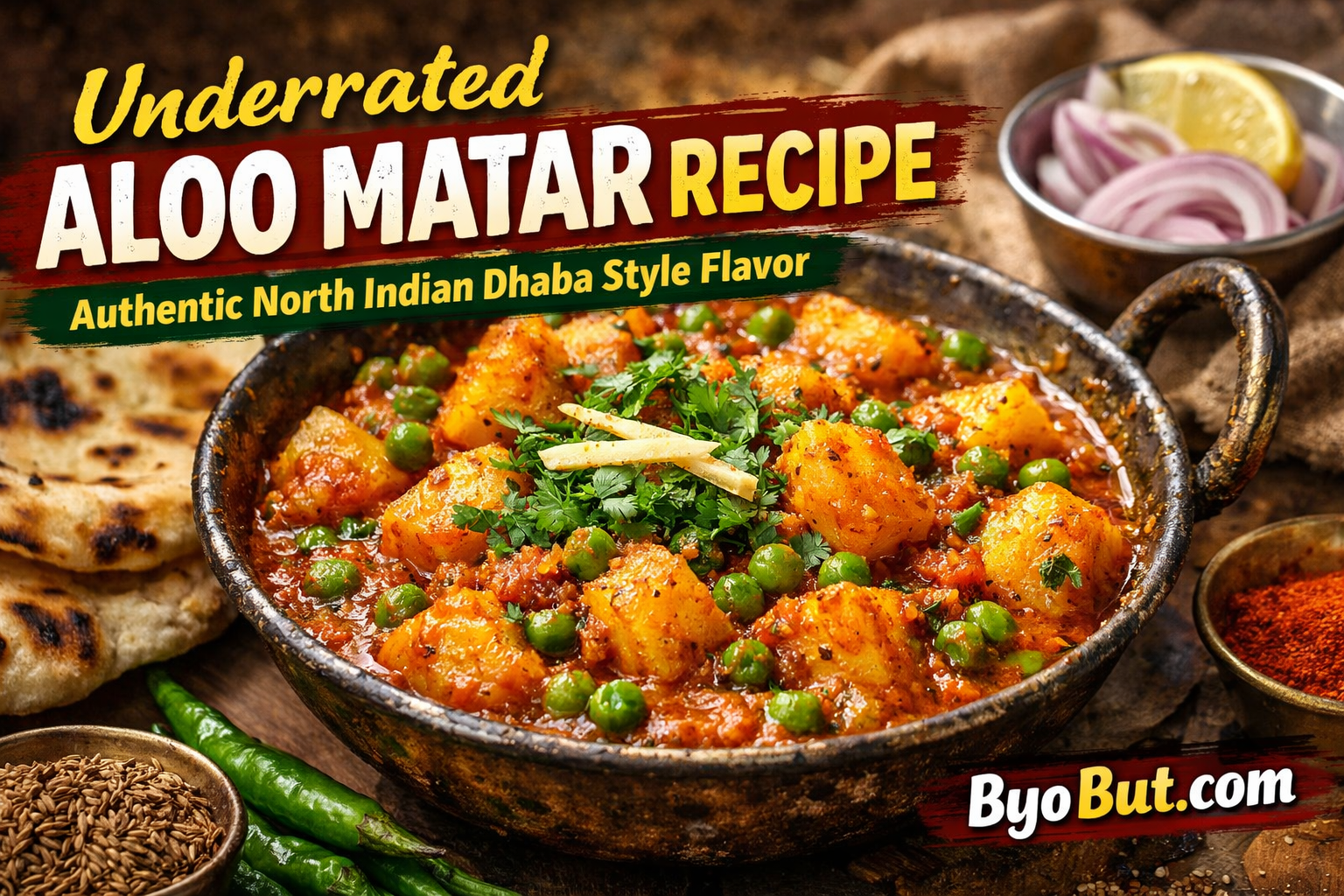
Underrated Aloo Matar Recipe Authentic North Indian Dhaba Style Flavor

The Secret to “Dhaba Style” Authenticity
Before we dive in, here are the three rules that separate the amateurs from the masters:
- Don’t Skimp on Oil: Dhabas use a generous amount of mustard oil. It carries the spice flavor and gives the gravy its signature “sheen.”
- The Grind: Never use store-bought ginger-garlic paste. Crushing them fresh with a mortar and pestle changes the chemical profile of the dish.
- The “Bhuna” Stage: You must fry the masala until the oil separates and the onions turn a deep, dark jammy brown.
Ingredients
The Base
- Potatoes (Aloo): 3 medium, peeled and cubed into 1-inch chunks.
- Green Peas (Matar): 1.5 cups (Fresh is best, but frozen works—just soak them in warm water first).
- Mustard Oil: 3-4 tbsp (Or ghee for a richer flavor).
The Aromatics
- Cumin Seeds (Jeera): 1 tsp.
- Whole Spices: 1 Bay leaf, 2 Green cardamoms, 1 inch Cinnamon stick, 2 Cloves.
- Onions: 2 large, very finely chopped (don’t puree them!).
- Ginger-Garlic Paste: 1.5 tbsp (Freshly crushed).
- Green Chilies: 2-3, slit lengthwise.
The Spice Blend
- Turmeric: $1/2$ tsp.
- Kashmiri Red Chili Powder: 1.5 tsp (for that deep red color without too much heat).
- Coriander Powder (Dhania): 1 tbsp.
- Cumin Powder: $1/2$ tsp.
- Dry Mango Powder (Amchur): $1/2$ tsp (The secret tang).
The Finish
- Tomatoes: 2 medium, pureed.
- Kasuri Methi: 1 tbsp (crushed between palms).
- Garam Masala: $1/2$ tsp.
- Fresh Coriander: A handful, chopped.
Step-by-Step Instructions
1. Tempering the Oil
Heat the mustard oil in a heavy-bottomed kadai or pressure cooker until it reaches the smoking point (this removes the raw pungency). Turn off the heat for a moment to let it cool slightly, then add the cumin seeds and whole spices. Let them sizzle for 30 seconds.
2. The Onion Foundation
Add the finely chopped onions. Sauté on medium flame. This is the most important step. You want them golden brown, not just translucent. Once they start changing color, add the ginger-garlic paste and green chilies. Sauté until the raw smell of garlic vanishes.
3. The Masala Bloom
Lower the heat. Add the turmeric, red chili powder, coriander powder, and cumin powder. Add a splash of hot water so the spices don’t burn. Fry for 2 minutes until the oil starts to ooze from the sides.
4. Tomato & Bhuna
Pour in the tomato puree and salt. Cover and cook on low-medium heat until the masala thickens and the oil completely separates from the paste. It should look dark and concentrated.
5. The Main Event
Add your potato cubes and peas. Toss them in the masala for 3-4 minutes. This “sears” the vegetables and ensures the flavor goes into the potato, not just around it.
6. The Simmer
Add 1.5 to 2 cups of hot water (never cold water, as it stops the cooking process).
- Pressure Cooker: 2 whistles on medium heat.
- Open Pot: Cover and simmer for 15-20 minutes until potatoes are fork-tender.
7. The Dhaba Finish
Once the gravy is cooked, take a few potato chunks and mash them slightly with the back of your spoon—this thickens the gravy naturally. Stir in the Kasuri Methi, Garam Masala, and Amchur. Let it sit covered for 5 minutes before serving.
Best Served With…
- Tandoori Roti or Butter Naan to scoop up the thick gravy.
- Jeera Rice if you prefer a “curry” feel.
- A side of Sirka Pyaaz (vinegar-soaked onions) and a dollop of salted butter on top.
Pro Tip: If you want that extra smoky “dhaba” flavor, perform a Dhungar (charcoal smoke treatment) at the very end. Place a hot coal in a small bowl inside the pot, pour a drop of ghee on it, and seal the lid for 2 minutes.